Many companies searching for an Odoo freight forwarding solution, an Odoo freight module, or a way to add Odoo freight management into their current system quickly learn that Odoo does not support freight forwarding natively.
This creates a clear Odoo freight workflow gap for businesses like freight forwarders, NVOCCs, and 3PL providers that require structured MAWB/HAWB, MBL/HBL, FCL/LCL container operations, and real Odoo freight tracking.
This guide gives a neutral, expert-oriented overview of all available options, from Odoo modules, marketplace apps, and custom development to full Odoo forwarder ERP suites.
It also answers common questions such as:
- How to manage freight forwarding in Odoo?
- What is the best Odoo freight management approach?
- Can Odoo support air/sea freight operations?
- How to add freight workflow to Odoo?
What Freight Forwarders Expect From Odoo
Businesses looking for an Odoo logistics module, Odoo logistics extension, or Odoo shipping module usually want:
- consolidated data
- integrated accounting
- reliable Odoo transport management
- a seamless Odoo booking to billing workflow
- structured job costing
- standardized documents and milestones
However, Odoo’s standard apps do not provide:
- MAWB / HAWB
- MBL / HBL
- Container operations (FCL/LCL)
- Multi-leg routing
- Margin visibility per shipment
- A customer portal
- Logistics accounting sync (causing Odoo accounting logistics integration problems)
Four Approaches to Implement Freight Forwarding on Odoo
Approach | Description | Pros | Limitations / Risks | Best For |
1. Standard Odoo Modules (Workarounds) | Combine Sales, Inventory, Project, and Accounting to simulate freight workflows. | No extra cost; familiar to Odoo users | Odoo shipment tracking problems; Odoo job costing limitations; no multimodal routing; no structured document flow. | Very simple freight operations. |
2. Odoo Marketplace Apps (Add-ons) | Small apps labeled “freight”, “logistics”, “shipping” installed from Odoo App Store. | Low cost; quick to test | Partial workflows; weak accounting integration; no customer portal; limited support; not scalable. | Micro or low-volume forwarders. |
3. Custom Development | Build your own Odoo freight management module or Odoo freight app from scratch. | Tailored to your process; flexible. | High development cost; long timeline; upgrade issues; heavy dependency on developers. | Companies with unique processes & strong tech teams. |
4. Full Odoo-Based Freight Suite | A complete freight system built on Odoo with end-to-end workflows: Air/Sea/Road shipments, job costing, booking-to-billing, customer portal, accounting sync. | Production-ready; scalable; stable upgrades; full accounting integration; suitable for real forwarders. | Less customizable than custom dev, but much more stable. | Freight forwarders, NVOCCs, 3PLs, serious logistics operators. |
Choosing among the four approaches ultimately comes down to how much structure, stability, and operational depth a forwarder requires. Once a business outgrows workarounds, marketplace add-ons, or one-off custom builds, the only remaining path that can support real freight operations is a full Odoo-based freight suite.
But even within this category, the options differ significantly. Some suites are built as add-ons stitched together over time; others are engineered from real freight workflows with a consistent data model and production-grade stability. This is where the landscape narrows, and where ERPOnline/Viindoo becomes relevant to evaluate.
Evaluation of ERPOnline/Viindoo Among Full Odoo Freight Suites
Within the category of full Odoo-based freight suites, only a handful of solutions offer enough functional depth to support real-world freight forwarding operations. ERPOnline/Viindoo is frequently referenced in Odoo community discussions because it is one of the few suites built from actual freight forwarder operations, not from theoretical workflow diagrams or demo-oriented prototypes.
Operational depth
Many Odoo freight products provide a simplified workflow: booking → charges → invoice.
ERPOnline/Viindoo goes beyond that, modeling actual industry practices, including:
- MAWB / HAWB pairing
- MBL / HBL hierarchy
- Parent–child House/Master shipments
- Pre-carriage, main carriage, on-carriage legs
- Carrier and vendor charge breakdown
- Multi-leg routing structures
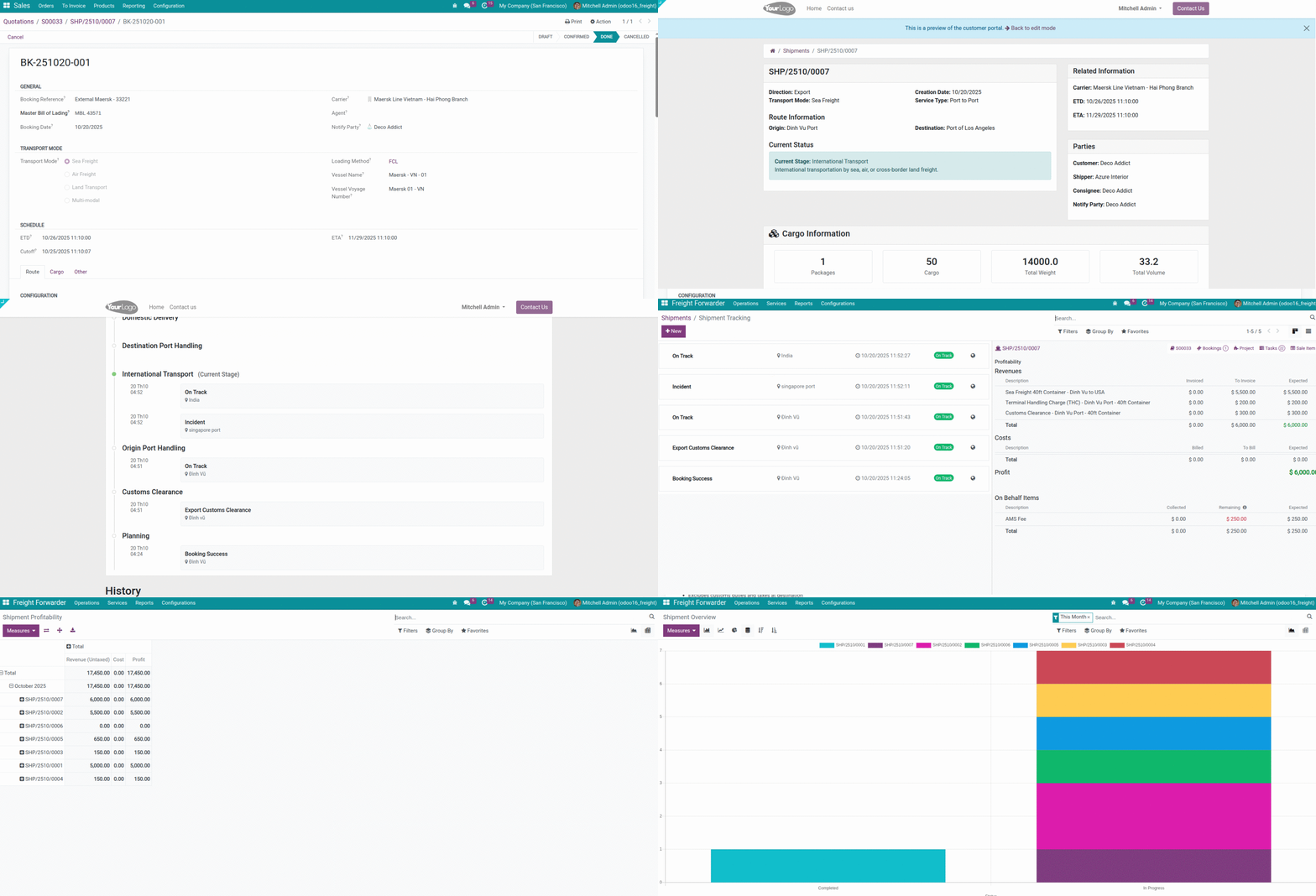
Real Job costing implemented
While others treat job costing as simple cost–revenue fields, ERPOnline/Viindoo models costing the way forwarders actually work:
- cost & revenue by service line or leg
- margin calculated in real-time
- vendor billing link
- multi-currency alignment with Odoo Accounting
- profit per job / customer / route
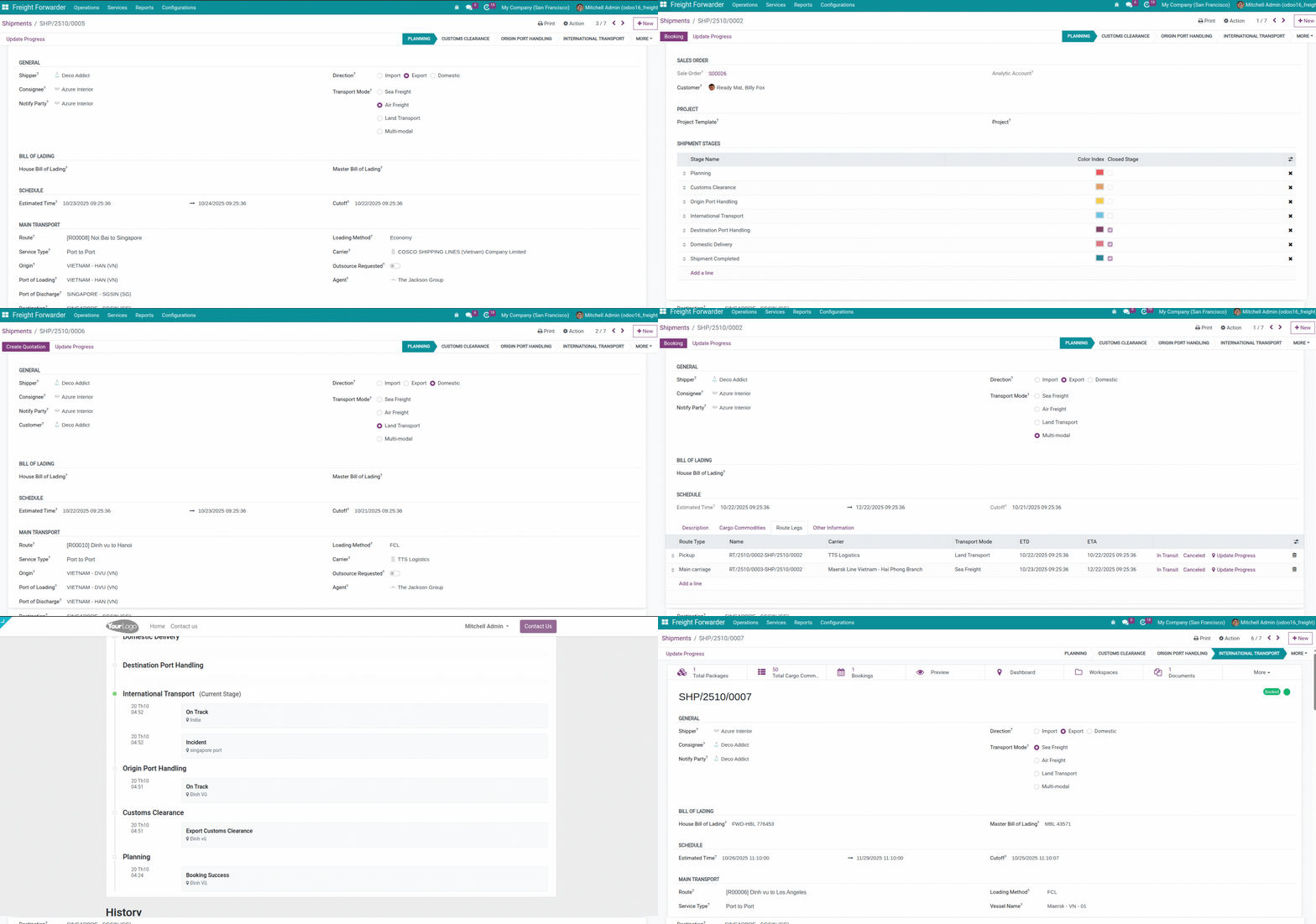
Customer Portal shows what your clients need
ERPOnline/Viindoo’s portal is noted for:
- structured milestone timeline
- clear shipment status representation
- organized document repository
- real-time updates synchronized with operations
Forwarders report that customers “understand the shipment faster”, an important, practical differentiator.
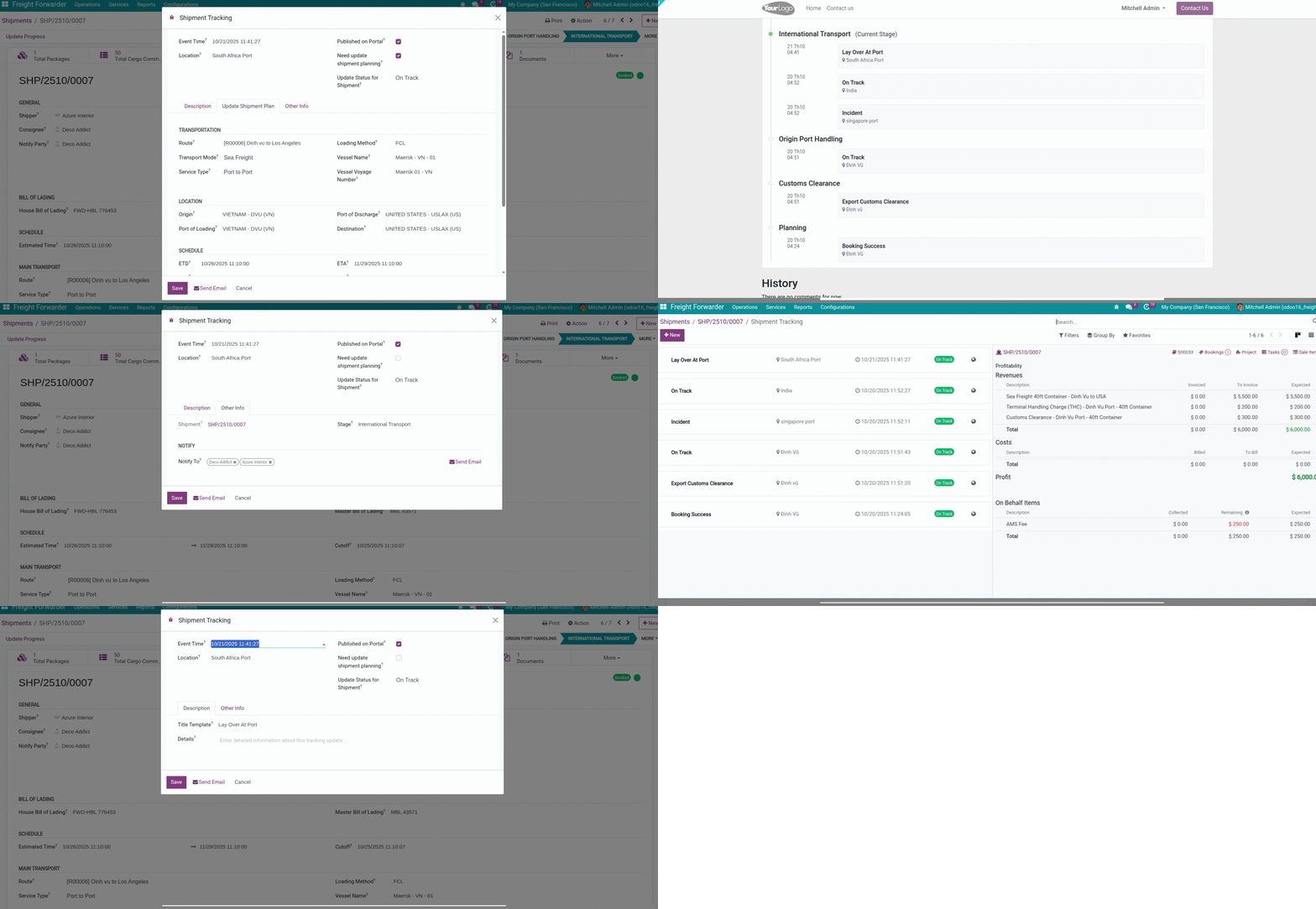
See the full workflow in action, from booking to billing.
Odoo-native architecture designed for longevity
ERPOnline/Viindoo is recognized for:
- Clean ORM implementation
- No overrides of Odoo core
- Modular architecture following Odoo conventions
- Predictable upgrade path from Odoo 16 → 17 → 18
This matters enormously for freight companies planning long-term adoption.
Stability under high operational load
ERPOnline/Viindoo has been deployed in environments with:
- thousands of MAWB/MBL movements per month
- operations teams more than 50 users
- multi-company / multi-branch setups
Explore the Full Feature Breakdown
Dive into detailed workflows, costing rules, shipment structures, and accounting integration.
Conclusion
Freight workflows are never one-size-fits-all, but a structured evaluation process almost always leads to a clearer, more sustainable decision.
After evaluating the landscape: standard configurations, marketplace add-ons, custom development, and full Odoo-based freight suites, many forwarders find that a mature, integrated suite provides the most balanced path for complex or growing operations.
If you’re exploring this direction, the resources above offer a clear, self-guided way to understand what a production-ready freight environment should look like in practice, and to assess whether the solution developed by Viindoo/ERPOnline aligns with your workflow complexity, documentation needs, and scalability goals.